

Advance Medical Imaging & RadiologyAdvanced Medical Imaging & Radiology Services at May Medical Diagnostic Centre, Lagos

May Medical Diagnostic Centre provides state-of-the-art Advanced Medical Imaging and Radiology services across Lagos and Nigeria to capture high-definition internal visuals, screen for hidden conditions, and guide accurate clinical decisions.
Modern medicine relies heavily on seeing exactly what is happening inside the human body without invasive surgery.
  • Radiology uses specialized forms of energy—such as X-rays, sound waves, and magnetic fields—to map out clear, detailed structural images of your organs, bones, and tissues.
  • Advanced Medical Imaging goes beyond basic scans, offering high-resolution deep structural views that reveal subtle changes in blood flow, tissue density, and organ function, enabling early detection of serious diseases.

Our Comprehensive Radiology & Imaging Modalities

We offer a full spectrum of diagnostic and screening imaging services tailored to the needs of hospitals, clinics, and walk-in patients in Nigeria:
1. High-Resolution Ultrasound (Ultrasonography)
Safe, completely radiation-free imaging that utilizes high-frequency sound waves to capture real-time, dynamic moving pictures.
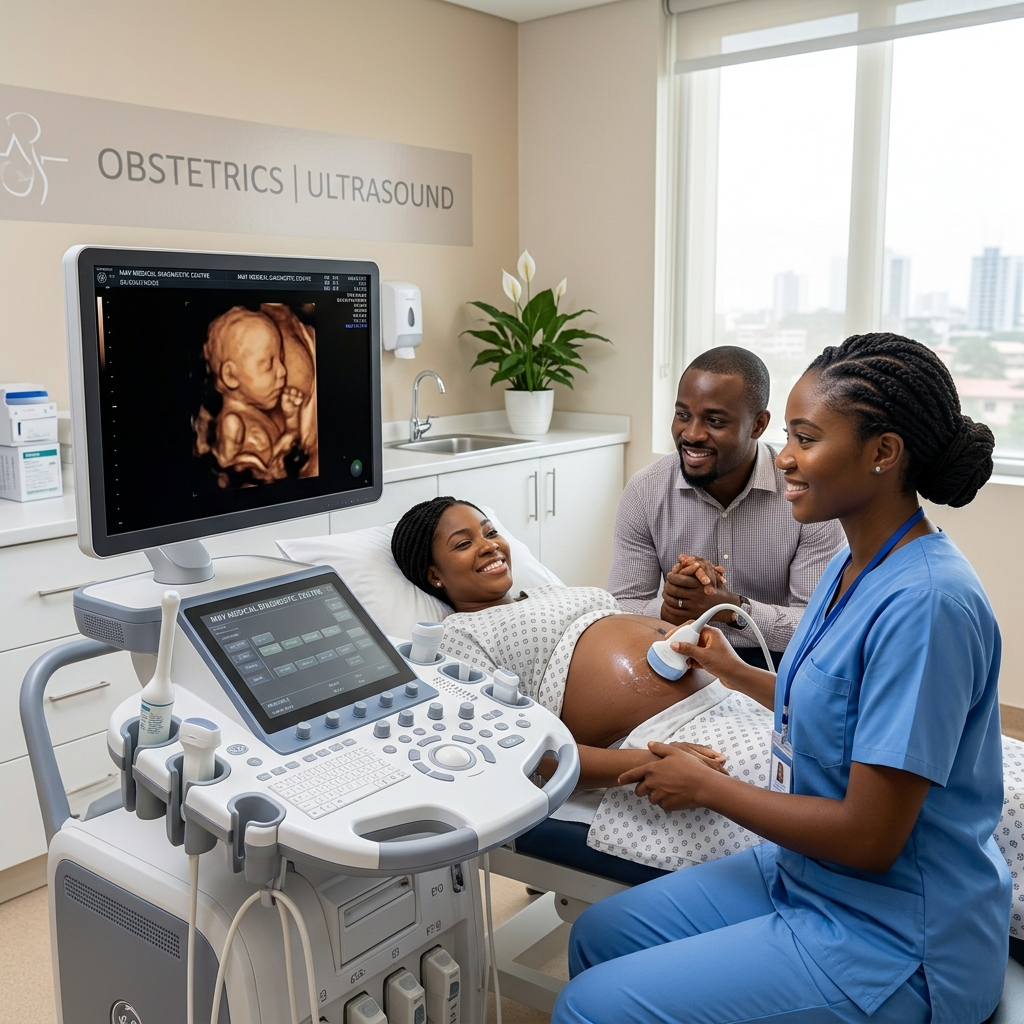
    • Obstetric & 3D/4D Pregnancy Scans: Monitors fetal development, checks amniotic fluid, and screens for congenital anomalies.
    • Abdominal & Pelvic Ultrasound: Evaluates vital internal organs like the liver, kidneys, gallbladder, appendix, uterus, and ovaries.
    • Vascular Doppler Studies: Assesses deep blood flow to detect blood clots, deep vein thrombosis (DVT), or arterial blockages.
    • Small Part Scans: High-precision evaluation of the thyroid gland, breasts, and scrotum.

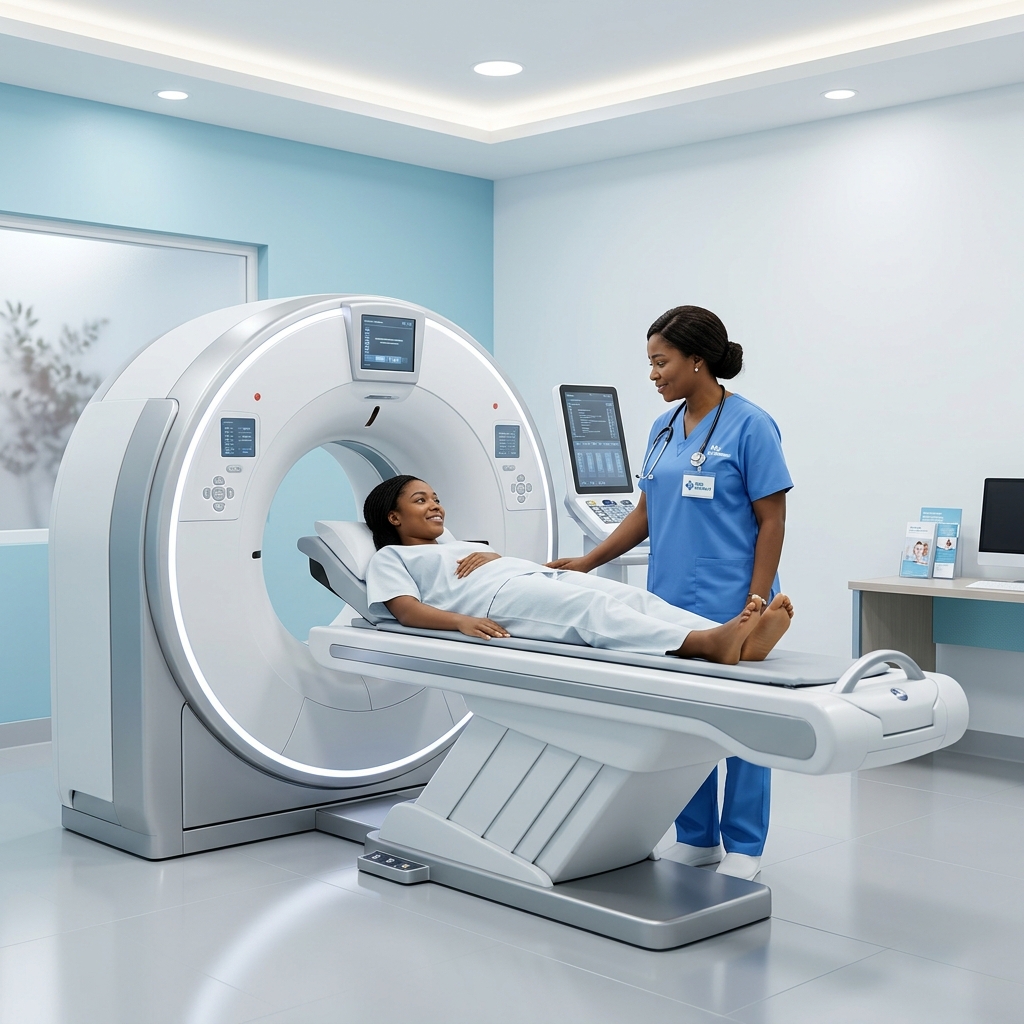
2. Advanced Computed Tomography (CT Scan)
Combines a series of X-ray images taken from different angles to create cross-sectional, 3D views of soft tissues, bone structures, and blood vessels.
    • Brain & Head CT: Rapidly identifies strokes, traumatic brain injuries, tumors, or severe chronic headaches.
    • Chest & Abdominal CT: Provides structural visualization of the lungs, abdominal organs, and complex vascular networks.

https://maymedics.com/wp-content/uploads/2020/06/large_blue_triangle_04.png
https://maymedics.com/wp-content/uploads/2026/11/image_7674b8af.jpg
We offer a full spectrum of diagnostic and screening imaging services tailored to the needs of hospitals, clinics, and walk-in patients in Nigeria:
1. High-Resolution Ultrasound (Ultrasonography)
Safe, completely radiation-free imaging that utilizes high-frequency sound waves to capture real-time, dynamic moving pictures.
    • Obstetric & 3D/4D Pregnancy Scans: Monitors fetal development, checks amniotic fluid, and screens for congenital anomalies.
    • Abdominal & Pelvic Ultrasound: Evaluates vital internal organs like the liver, kidneys, gallbladder, appendix, uterus, and ovaries.
    • Vascular Doppler Studies: Assesses deep blood flow to detect blood clots, deep vein thrombosis (DVT), or arterial blockages.
    • Small Part Scans: High-precision evaluation of the thyroid gland, breasts, and scrotum.

2. Advanced Computed Tomography (CT Scan)
Combines a series of X-ray images taken from different angles to create cross-sectional, 3D views of soft tissues, bone structures, and blood vessels.
    • Brain & Head CT: Rapidly identifies strokes, traumatic brain injuries, tumors, or severe chronic headaches.
    • Chest & Abdominal CT: Provides structural visualization of the lungs, abdominal organs, and complex vascular networks.

https://maymedics.com/wp-content/uploads/2020/04/small_blue_triangle.png
https://maymedics.com/wp-content/uploads/2026/10/image_5b41ac19.jpg
High-Resolution Ultrasound (Ultrasonography)
Unlike standard, older ultrasound machines that can produce grainy or blurry images, high-resolution ultrasonography uses ultra-high-frequency sound waves to capture fine, micro-structural details inside the body.
  • It acts like an internal camera, mapping out soft tissues, organ walls, and fluid dynamics in real time.
  • Because it utilizes harmless acoustic sound waves rather than ionizing radiation, it is 100% safe for pregnant individuals, infants, and regular repeat screenings.
 
Our Specialized Ultrasound Testing Menu
We offer a complete range of specialized ultrasound examinations to meet diverse clinical requirements across Lagos State:
1. Advanced Obstetric & Gynecological Scans
Ensuring the highest standards of maternal and fetal care through clear, high-definition visualizations.
  • Routine & Dating Pregnancy Scans: Confirms gestational age, checks fetal viability, and monitors early development.
  • 3D/4D Fetal Imaging: Provides lifelike, structural views of your baby’s features and movement in real time.
  • Anomaly Scan (Second-Trimester Morphological Scan): A crucial high-resolution screening performed between weeks 18 and 22 to check the baby’s internal organs, limbs, and spine for congenital anomalies.
  • Pelvic Ultrasound (Transabdominal & Transvaginal): Evaluates the uterus, ovaries, and fallopian tubes to investigate pelvic pain, irregular bleeding, fibroids, or ovarian cysts.
2. Abdominal & Small Parts Ultrasonography
Pinpointing structural issues in deeply seated internal organs and superficial glands.
  • Whole Abdomen & Pelvis Scan: Comprehensive evaluation of the liver, gallbladder, kidneys, spleen, pancreas, and urinary bladder to check for gallstones, kidney stones, or fatty liver disease.
  • High-Frequency Breast Ultrasound: A crucial diagnostic tool used alongside mammography to investigate palpable lumps and differentiate between solid tumors and benign fluid-filled cysts.
  • Thyroid & Neck Scans: Assesses thyroid nodules, parathyroid glands, and localized lymph nodes.
  • Scrotal / Testicular Ultrasound: Investigates acute testicular pain, swelling, varicoceles, or masses.
3. Vascular Doppler Studies
Specialized ultrasound technology that measures the speed and direction of blood flow through your arteries and veins.
  • Color Doppler Extremity Scans: Used to diagnose life-threatening deep vein thrombosis (DVT) or peripheral artery disease (PAD) in patients experiencing leg swelling or chronic pain.
  • Carotid Doppler Ultrasound: Evaluates blood flow through the neck arteries leading to the brain to assess stroke risks.
Why Choose May Medical for Ultrasound Scans in Nigeria?

Feature Our Technical Standard Benefit to You
Multi-Frequency Probes Advanced high-density transducer arrays Provides unparalleled depth penetration and sharp tissue contrast
Expert Scan Execution Conducted by experienced sonographers and consultant radiologists Eliminates diagnostic ambiguity with highly accurate interpretations
Radiation-Free Safety Completely non-invasive acoustic technology Perfectly safe for expectant mothers, neonates, and routine health checks
No-Wait Digital Delivery Instant electronic access to scan images and structured reports Your doctor can immediately view high-quality images via our online portal
Ultrasonography - Frequently Asked Questions
Why do I need a full bladder for a pelvic or early pregnancy ultrasound?
A full bladder acts as a clear “sonic window” for the sound waves. Sound travels exceptionally well through fluid. When your bladder is full, it physically pushes the gas-filled intestines out of the way and lifts the uterus into a position that allows our high-resolution probes to capture the sharpest possible images.
 
How long does a high-resolution ultrasound scan take?
Most routine scans—such as an abdominal, pelvic, or routine pregnancy scan—are completed within 15 to 30 minutes. Complex examinations, such as detailed fetal anomaly screenings or dual-limb vascular Doppler studies, may take 45 minutes to an hour of meticulous evaluation.
 
Is there any pain or side effect associated with the scan?
No, ultrasound is completely painless and has no known biological side effects. You will only feel the placement of a lukewarm, water-based gel and light pressure as the smooth transducer probe moves across your skin.

Our Imaging Solutions

Our imaging department utilizes cutting-edge radiology equipment to provide deep insights into your physical health without discomfort.
https://maymedics.com/wp-content/uploads/2026/11/image_42058c4b-1.jpg
Placeholder image

Obstetric Ultrasound (Pregnancy Scans)

Monitor fetal growth, evaluate amniotic fluid levels, and confirm healthy gestational development at every trimester.
What is an Obstetric Ultrasound?
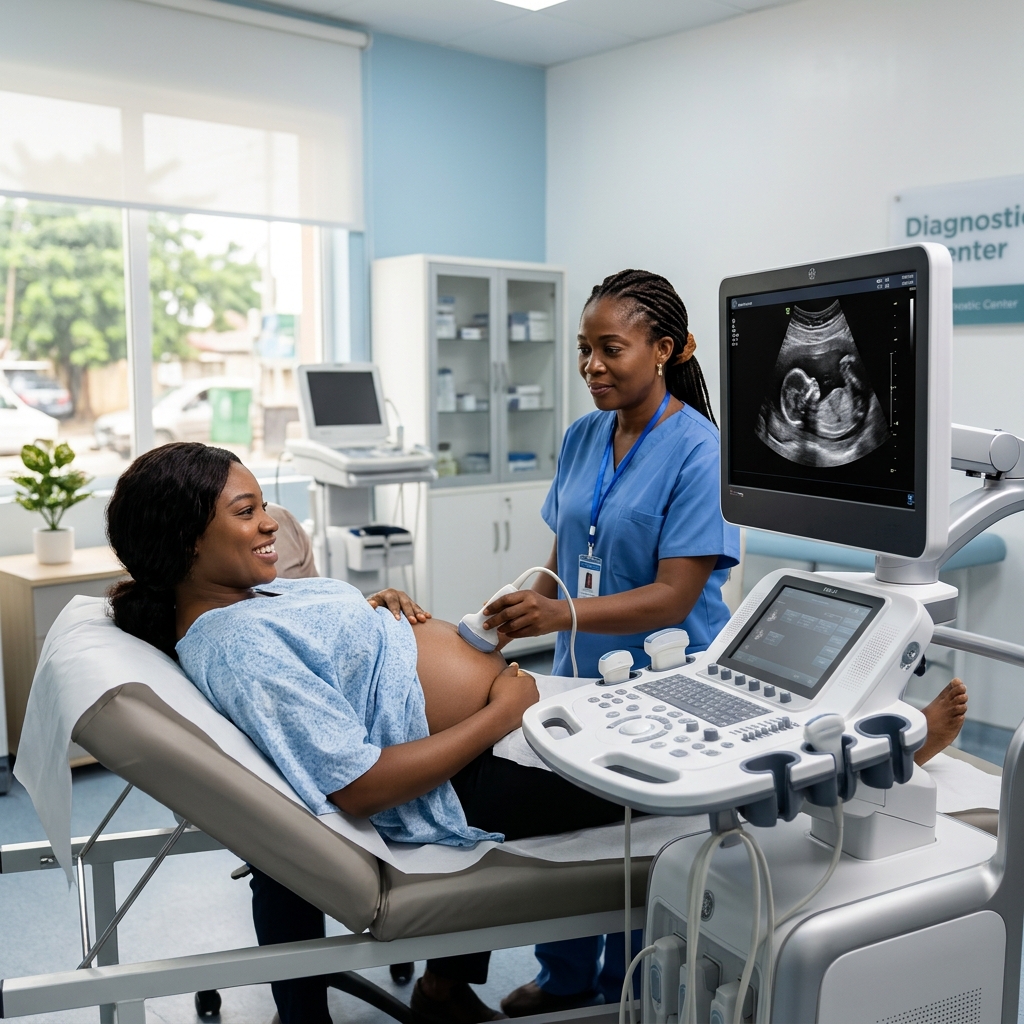
An obstetric ultrasound is a safe, completely non-invasive diagnostic procedure that uses high-frequency sound waves to create real-time images of a developing embryo or fetus inside the uterus.
  • Because it relies entirely on harmless acoustic sound waves rather than ionizing radiation, it is 100% safe for both the mother and the baby.
  • It serves as the primary clinical tool for healthcare providers to evaluate structural development, confirm accurate gestational age, and proactively detect potential complications early
Pregnancy Scans by Trimester
Your pregnancy moves through distinct structural stages, and our high-resolution scans are tailored to provide the exact insights needed during each milestone:
1. First Trimester: Viability & Dating Scans (Weeks 6 to 13)
Conducted during early pregnancy to establish a healthy foundation.
  • Pregnancy Confirmation: Verifies that the embryo is safely implanted inside the uterus, ruling out an ectopic pregnancy.
  • Gestational Age & EDD: Measures the crown-rump length (CRL) to determine the exact age of the baby and provide an accurate Estimated Date of Delivery.
  • Heartbeat Detection: Provides the earliest visual and auditory confirmation of the fetal heart rate.
  • Multiple Gestations: Identifies if you are expecting twins, triplets, or more.
2. Second Trimester: Morphological Anomaly Scan (Weeks 18 to 22)
A crucial high-resolution architectural screening to evaluate your baby’s anatomy from head to toe.
  • Organ & Limb Review: Systematically examines the baby’s brain, heart, spine, kidneys, stomach, and limbs to screen for structural anomalies.
  • Placental Mapping: Determines the position of the placenta relative to the cervix to rule out conditions like placenta previa.
  • Gender Reveal (Optional): If requested, our sonographers can confidently determine the biological sex of your baby.
3. Third Trimester: Growth & Fetal Well-Being Scans (Week 24 to Term)
Focuses on tracking preparation for a safe delivery.
  • Fetal Growth & Weight Profiles: Estimates the baby’s current weight and tracks growth tracking curves.
  • Amniotic Fluid Index (AFI): Measures the volume of fluid surrounding the baby to ensure adequate protection and nourishment.
  • Fetal Positioning: Confirms whether the baby is in a cephalic (head-down) position or breach position as the delivery date approaches.
4. Advanced 3D & 4D Live Ultrasound
  • Lifelike Visualization: Moves beyond traditional flat 2D images to build realistic three-dimensional facial pictures and capture real-time moving videos (4D) of your baby yawning, stretching, or smiling.
Why Choose May Medical for Pregnancy Scans in Nigeria?

Feature Our Care Standard Benefit to You
High-Density Probes Advanced multi-frequency transabdominal & transvaginal transducers Delivers unparalleled image resolution, even in early or complex stages
Empathetic Female Specialists Highly trained, compassionate sonographers Ensures a deeply comfortable, supportive, and private scanning environment
Partner-Friendly Suites Spacious imaging rooms with dedicated viewing monitors Allows partners and family members to share in the joy of seeing the baby
Instant Digital Access Cloud-based PACS archiving and immediate report prints Walk out with physical scan prints and digital links to share with your doctor
Frequently Asked Questions (FAQs)
Do I need a full bladder for a pregnancy ultrasound scan?
 
Yes, but generally only during your first trimester (under 13 weeks). An early pregnancy ultrasound requires you to drink 4 to 6 glasses of water an hour before your scan. A full bladder acts as a clear “acoustic window,” pushing your intestines aside and tilting the uterus upward for a much clearer view. For second and third-trimester scans, your amniotic fluid naturally takes over this job, so a full bladder is usually not required.
 
How safe are routine ultrasound scans for my developing baby?
Obstetric ultrasound is entirely safe. Extensive clinical studies over several decades have shown that diagnostic ultrasound waves carry zero biological risks and cause no harm to the mother or fetus. We strictly adhere to the ALARA (As Low As Reasonably Achievable) principle to minimize exposure time while capturing maximum diagnostic data.
 
When is the best time to get a 3D or 4D ultrasound scan?
The ideal window for a 3D/4D live pregnancy scan is between weeks 26 and 30. During this period, the baby has developed sufficient subcutaneous fat beneath the skin to show distinct facial features, yet there is still enough surrounding amniotic fluid to capture clear, uncrowded structural views.

Pelvic & Abdominal Ultrasound at May Medical Diagnostic Centre, Lagos

https://maymedics.com/wp-content/uploads/2026/10/Chemical-pathology.jpg
Pelvic & Abdominal Ultrasound : Frequently Asked Questions (FAQs)
What is a Pelvic & Abdominal Ultrasound?
An abdominal and pelvic ultrasound examination is a completely safe, non-invasive diagnostic scan that uses high-frequency acoustic sound waves to capture real-time, structural images of your internal organs.
  • Unlike standard X-rays or CT scans, ultrasound involves zero ionizing radiation, making it an excellent, harm-free baseline screening tool for both adults and pediatric patients.
  • It operates like a precise internal camera, allowing our consultant radiologists to visualize the shape, texture, size, and blood flow dynamics of organs deep within your torso.


Our Specialized Internal Scan Options
Depending on your symptoms or your physician’s prescription, your evaluation can be tailored into specific diagnostic modules:
1. Whole Abdomen Ultrasound
This scan maps out major organs located in your upper and mid-abdominal cavities to investigate issues like chronic indigestion, sharp side pains, or metabolic variances.
  • Liver & Gallbladder: Screens for fatty liver disease, liver cirrhosis, localized cysts, and painful gallstones or biliary sludge.
  • Kidneys & Urinary Bladder: Detects structural kidney stones, renal cysts, hydronephrosis (fluid backup), and urinary tract obstructions.
  • Spleen & Pancreas: Evaluates structural inflammation (such as acute pancreatitis) or unexplained organ enlargement (splenomegaly).
2. Pelvic Ultrasound
Focuses on evaluating structures located in the lower abdomen and pelvic cradle, primarily targeting reproductive and lower urinary health.
  • Gynecological Scans (For Women): Evaluates the uterus and ovaries to investigate pelvic pain, irregular or heavy menstrual bleeding, uterine fibroids, ovarian cysts, or pelvic inflammatory disease (PID). Available via transabdominal (outer skin) or transvaginal (internal scan for micro-structural clarity) paths.
  • Prostate & Pelvic Scans (For Men): Assesses the health and size of the prostate gland to check for benign prostatic hyperplasia (BPH) or urinary retention.
Why Choose May Medical for Internal Scans in Nigeria?

Feature Our Technical Standard Benefit to You
High-Density Arrays Advanced harmonic tissue imaging probes Drastically reduces image graininess to reveal microscopic cysts or stones
Expert Execution Conducted by licensed sonographers and radiologists Ensures high diagnostic safety with zero guesswork on structural anomalies
Complete Patient Privacy Separate, fully curtained diagnostic scanning bays Guarantees absolute comfort and dignity during personal pelvic scans
Instant Report Delivery Digital PACS integration with crisp physical printouts Walk away with verified diagnostic reports ready for your doctor
Frequently Asked Questions (FAQs)
How should I prepare for a pelvic and abdominal ultrasound?
Proper preparation ensures the sharpest possible image contrast:
    • For a Whole Abdomen Scan: You must fast (no food, milk, or drinks except plain water) for 6 to 8 hours before your appointment. This prevents gas buildup in your intestines and ensures your gallbladder is fully distended for clear viewing.
    • For a Pelvic Scan: You must arrive with a comfortably full bladder. We advise drinking 4 to 6 large glasses of water roughly 1 hour before the scan and holding it. The urine-filled bladder pushes air-filled intestines aside and lifts the pelvic organs into plain view.

Can I have both scans done during the same visit?
 
Yes, absolutely. If your doctor prescribes a “Whole Abdomen and Pelvis Ultrasound,” we will perform both examinations sequentially during a single slot. Our sonographers will typically scan your pelvic organs first while your bladder is full, allow you to empty your bladder, and then complete the upper abdominal evaluation.
How long does the procedure take?
A routine abdominal or pelvic scan usually takes between 15 to 30 minutes. If you are undergoing a combined upper and lower abdominal profile, please allow up to 45 minutes for a meticulous, head-to-toe organ check.

Prostate & Breast Ultrasound Services at May Medical Diagnostic Centre, Lagos, Nigeria

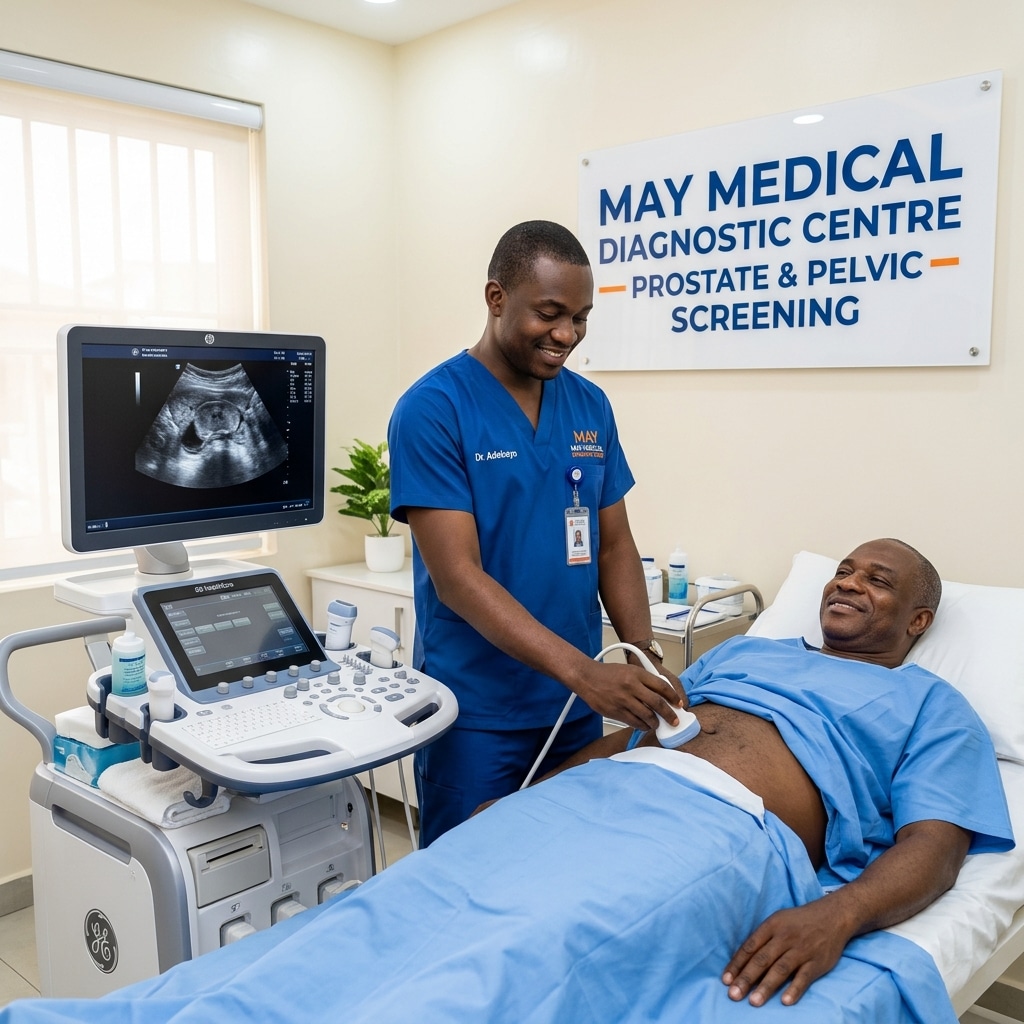
May Medical Diagnostic Centre provides specialized, high-resolution Prostate and Breast Ultrasound services across Lagos and Nigeria for the early detection of tissue abnormalities, cysts, and structural changes. By combining ultra-high-frequency linear imaging probes with a private, supportive clinical environment, our radiology team delivers safe, radiation-free diagnostic evaluations that empower men and women to take proactive control of their health.
https://maymedics.com/wp-content/uploads/2026/11/image_5a9952f0.jpg
Prostate & Break Ultrasound : Frequently Asked Questions (FAQs)
What is a High-Frequency Small Parts Ultrasound?
Unlike routine scans that evaluate large body cavities, Prostate and Breast Ultrasounds belong to a specialized branch of diagnostic imaging known as small parts ultrasonography.
  • Superior Micro-Detail: Using ultra-high-frequency sound waves, our probes capture razor-sharp, close-up images of superficial breast tissue and deep pelvic structures.
  • Radiation-Free Precision: Because it relies completely on harmless acoustic sound waves rather than X-rays, it is 100% safe for younger patients, pregnant women, and regular follow-up monitoring.
Our Specialized Screening Modules
We tailor our ultrasound protocols to address specific gender-focused health priorities with maximum accuracy and comfort:
1. High-Resolution Breast Ultrasound (Women’s Health)
An essential diagnostic and preventive screening tool designed to evaluate breast tissue density and investigate localized symptoms.
  • Lump Clarification: Quickly differentiates between harmless, fluid-filled benign cysts and solid tissue masses that require further clinical attention.
  • Dense Breast Evaluation: Serves as a vital companion to digital mammography, offering clearer visibility through dense breast tissue common in women under age 40.
  • Symptom Investigation: Evaluates unexplained breast pain, localized skin thickening, structural changes, or nipple discharge.
  • Color Doppler Integration: Assesses internal blood flow within a lump to provide your physician with deeper diagnostic insight.
2. Prostate Ultrasound & Pelvic Screening (Men’s Health)
A critical preventative and diagnostic scan for men experiencing urinary changes or undergoing routine wellness checks.
  • Prostate Volume & Size Assessment: Accurately measures the dimensions of the prostate gland to screen for Benign Prostatic Hyperplasia (BPH / enlarged prostate).
  • Urinary Retention & Bladder Check: Evaluates bladder wall thickness and measures post-void residual urine to see how effectively your bladder empties.
  • Prostatitis & Structural Screening: Investigates persistent pelvic discomfort, painful urination, or abnormal PSA (Prostate-Specific Antigen) blood test results.
Why Choose May Medical for Prostate & Breast Scans in Nigeria?

Feature Our Clinical Standard Benefit to You
High-Frequency Probes Specialized linear and pelvic multi-frequency transducers Reveals subtle, millimeter-sized tissue changes with zero blur
Strict Privacy & Comfort Dedicated, private scanning suites with empathetic staff Ensures complete dignity and peace of mind during sensitive exams
Seamless Lab Pairing Integrated on-site PSA blood tests and tumor marker panels

Complete your imaging and blood work under one roof in Lagos


Consultant Reporting Every scan reviewed by board-certified radiologists Delivers reliable, actionable reports directly to your doctor
Frequently Asked Questions (FAQs)
How should I prepare for a Prostate or Breast Ultrasound?
Preparation varies depending on which scan you are scheduled to take:
  • For a Breast Ultrasound: No fasting or water intake is required. Simply wear a comfortable two-piece outfit so you can easily remove your top, and avoid applying heavy lotions or powders around the chest area on the day of your scan.
  • For a Transabdominal Prostate Ultrasound: You must arrive with a comfortably full bladder. Please drink 4 to 6 glasses of water about an hour before your appointment and hold your urine. A full bladder acts as a clear window that pushes bowel gas away and brings the prostate into sharp focus.
Does a Breast Ultrasound replace a Mammogram?
No, they work best together as complementary tools. A mammogram is the gold standard for spotting tiny calcium deposits (micro-calcifications) across the entire breast, while a breast ultrasound is superior for examining specific lumps up close and looking through dense breast tissue. Your doctor or radiologist may recommend one or both depending on your age and clinical symptoms.
Is a Prostate Ultrasound painful?
A standard transabdominal (pelvic) prostate ultrasound is completely painless. You will simply lie on an examination table while the sonographer glides a smooth, warm gel-coated probe over your lower abdomen.

SERVICESOur Core Service Categories

Comprehensive Medical Laboratory
Accurate pathology testing across hematology, chemical pathology, microbiology, and immunology.
Advanced Medical Imaging & Radiology
High-resolution imaging for precise internal anatomical viewing and pregnancy monitoring.
Executive & General Health Screening
Preventative health packages tailored for individuals, couples, pregnant women, and corporate organizations.
Professional Sample Collection
Experience maximum comfort and strict clinical safety standards during your laboratory sample collection.
bt_bb_section_top_section_coverage_image
https://maymedics.com/wp-content/uploads/2020/04/small_blue_triangle.png

Schedule Your Test Today

Take control of your health with precise immune system insights.
bt_bb_section_top_section_coverage_image
https://maymedics.com/wp-content/uploads/2020/06/large_blue_triangle_02.png
https://maymedics.com/wp-content/uploads/2020/04/home_experience_07.jpg
https://maymedics.com/wp-content/uploads/2020/04/home_experience_08.jpg
https://maymedics.com/wp-content/uploads/2020/04/home_experience_02.jpg
https://maymedics.com/wp-content/uploads/2020/04/home_experience_04.jpg
https://maymedics.com/wp-content/uploads/2020/04/experience_02.png

Serology & Immunology

Frequently Asked Questions (FAQs)
What is Serology & Immunology Testing?
Your immune system is your body’s primary defense mechanism against invaders like bacteria, viruses, and other foreign substances.
  • Serology focuses on identifying specific antibodies formed by your immune system in response to a particular foreign particle (antigen).
  • Immunology investigates deeper into immune system disorders, mapping out how well your body protects itself or whether it is mistakenly attacking its own healthy tissues.
Do I need to fast before a serology or immunology test?

Most serology and immunology tests do not require fasting. You can typically eat and drink normally beforehand. However, if your blood sample is being shared with other routine screenings (like a fasting blood sugar or lipid panel), you may need to fast for 8 to 12 hours. Always follow the specific instructions provided by your booking coordinator.

How long does it take to get my immunology results back?

Many routine infectious disease screenings are completed within 24 to 48 hours. Highly specialized autoimmune panels or rare antibody lookups may take a few business days due to the intricate incubation and validation processes required.

Can a serology test tell me if I am fully immune to a disease?

Yes, certain titer tests can verify your immunity. Tests like the Rubella titer or Hepatitis B surface antibody test measure the exact concentration of protective antibodies in your blood to confirm if a previous vaccination or past infection is still shielding you.